Eggplant Trial
September 2025 – El-Salhiya, Ismailia Governorate, Egypt
Trial Introduction
The trial aims to evaluate yield performance, fruit quality, resistance to pests and diseases, and adaptability to local conditions in both open fields and greenhouse cultivation.
Trial Monitoring
- Technical Team: Company agronomists and crop technicians visit the field weekly.
- Monitoring Method: Each plant is observed from transplanting to harvest. Notes are taken on vegetative growth, flowering, fruit set, and any signs of pests or diseases.
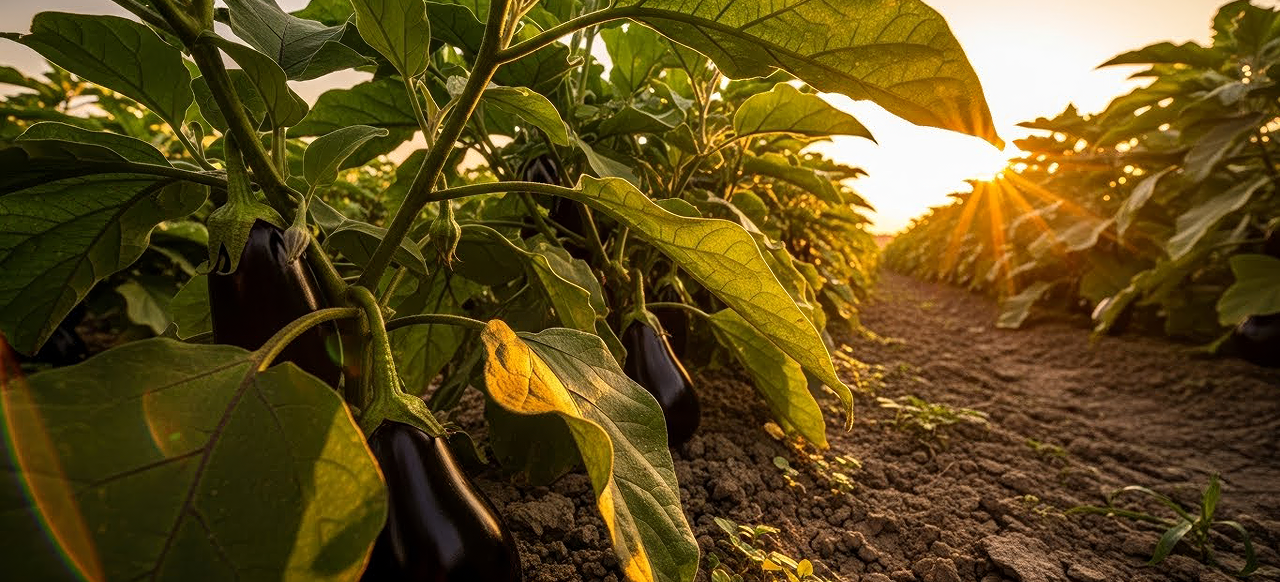
- Visual Documentation: High-quality photos are captured at each growth stage to compare plant performance across the trial units.
- Irrigation & Fertilization: Every watering and fertilization event is recorded to track its effect on yield and fruit quality.
- Note: Any abnormal plant symptoms (yellowing, spots, wilting, pest damage) are immediately recorded with detailed descriptions.
Variety Evaluation
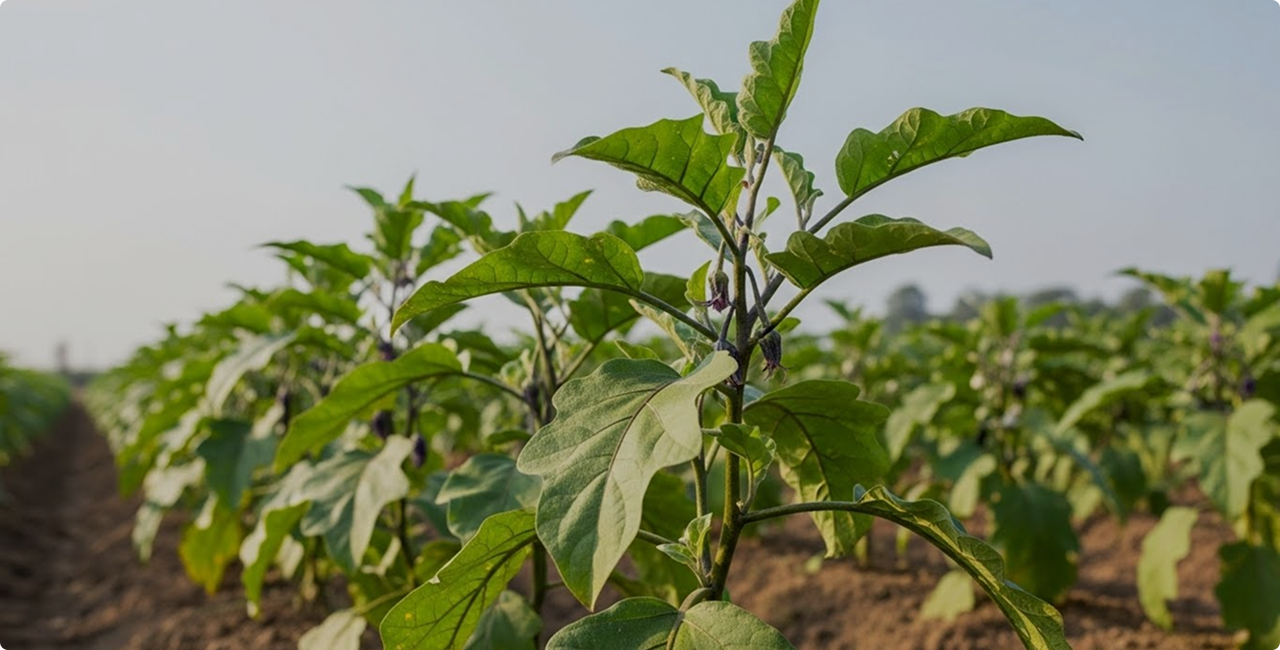
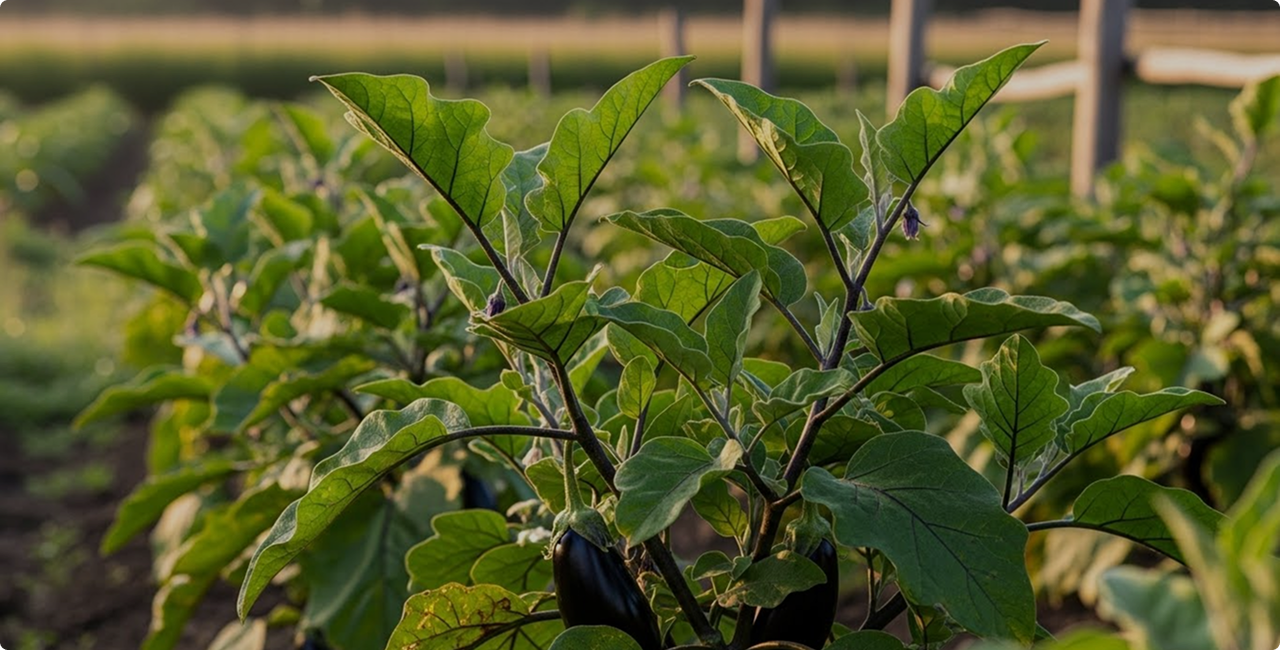
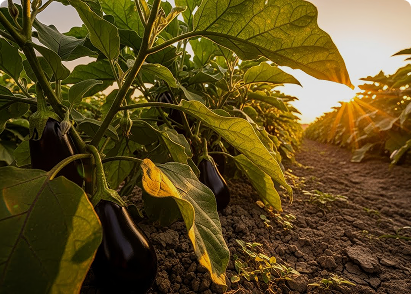
- Plants appear strong with no major wilting or fungal infections.
- Good resistance to gray mold and blight; minor effects observed under high humidity.
- Low pest pressure; whitefly presence does not affect overall growth.
- Stems are sturdy, and branching is well-balanced for easy support and harvest.
- Leaves are dark green and healthy, indicating good nutrition and nutrient uptake.
- Early fruit set is observed, with continuous and uniform growth.
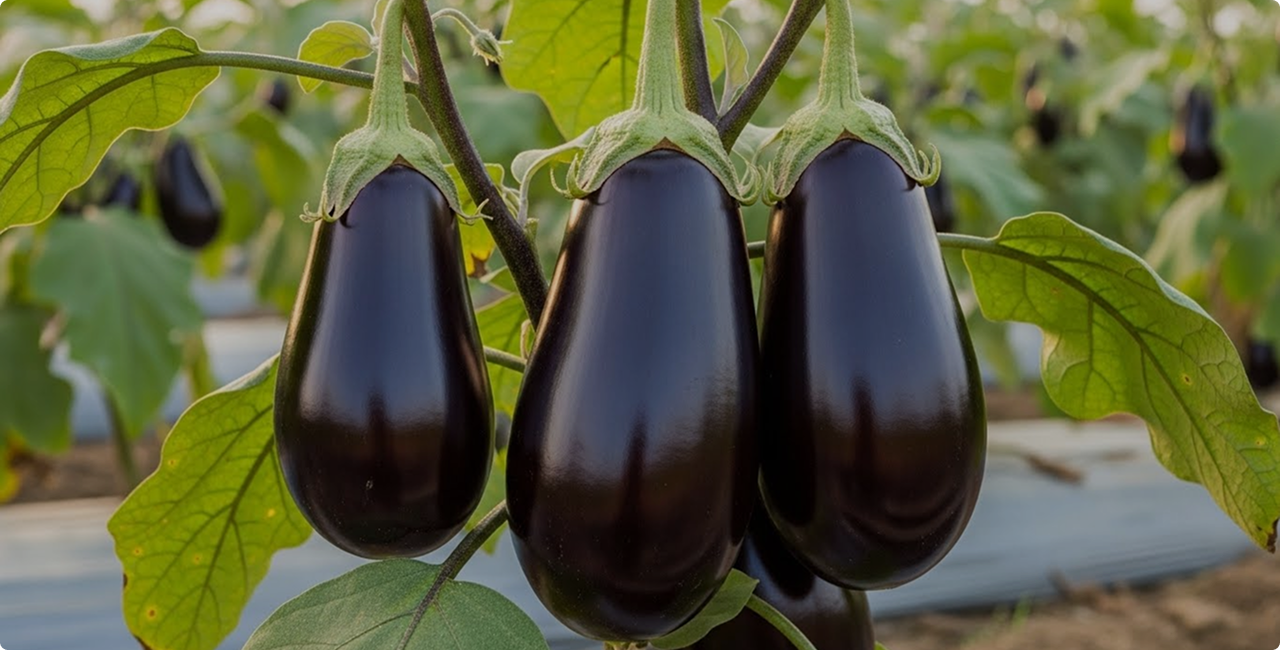
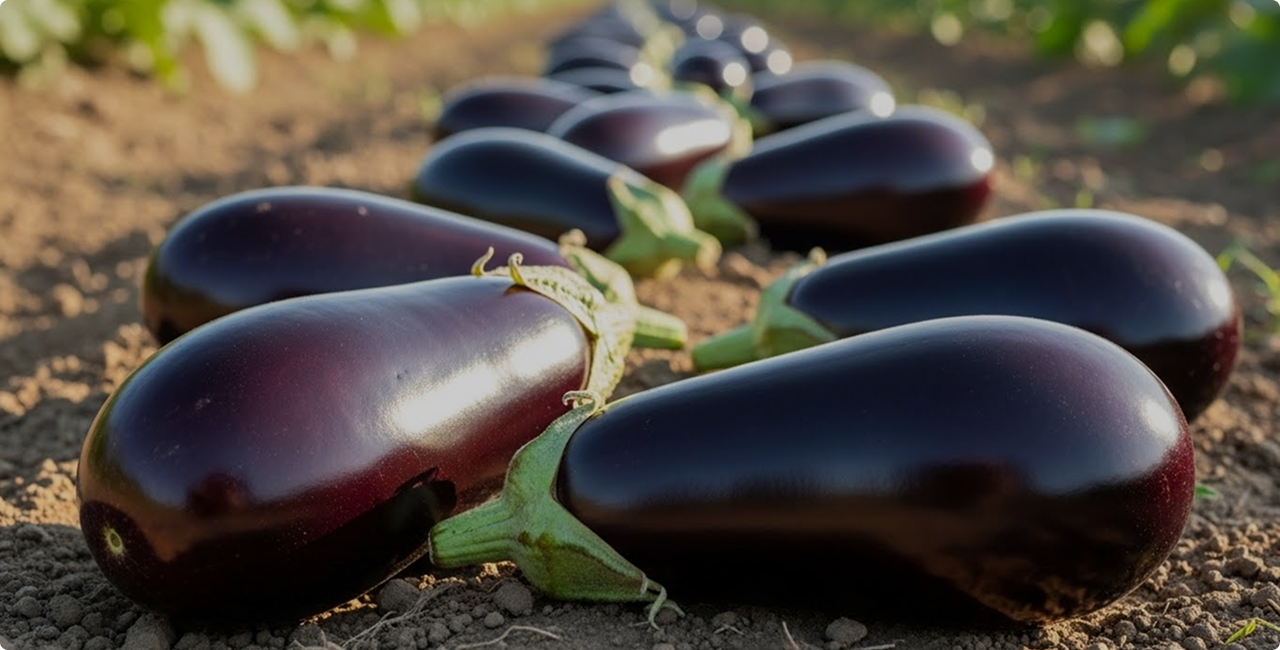
Each plant - produces multiple large fruits, 15–26 cm in length.
- Fruits are uniform in shape and color, facilitating direct marketing.
- Firm white flesh, ideal for cooking and storage.
- Shiny, blemish-free skin.
- Uniform fruit size, suitable for packing and export.
Technical Summary
Recommendations